Tuesday, June 2, 2020

Nature and Your Health

Perhaps simple outdoor activities, such as gardening or going for a walk in your neighborhood, have become part of your daily life lately. I

Click here to view in browser.

NIH National Center for Complementary and Integrative Health banner image
Health and Wellness Information banner image

Perhaps simple outdoor activities, such as gardening or going for a walk in your neighborhood, have become part of your daily life lately. If so, this might be good news for your health!


Contact with nature may be good for mental health, physical health, and general subjective well-being. This is a new field of research, and much remains to be learned, but the early evidence is promising.


Dr. Gregory Bratman of the University of Washington gave a lecture at NCCIH in which he talked about the potential benefits of exposure to nature. You can read a summary of his lecture on our Research Blog and watch the full lecture at the link below.


Watch the lecture


This email was sent to myhcistech.healthnews360@blogger.com using GovDelivery Communications Cloud on behalf of: National Center for Complementary and Integrative Health · 9000 Rockville Pike · Bethesda, MD 20892 GovDelivery logo

Monday, June 1, 2020

Safe Driving | Aphasia | Heart Disease | Cataracts | COPD


Protecting yourself behind the wheel; how aphasia affects language; comparing heart disease treatments; how cataracts cloud vision; and more
News in health

COVID-19 is an emerging, rapidly evolving situation, and we at NIH are doing everything we can toward the development of diagnostics, therapeutics, and vaccines. You can find the latest public health information from CDC at www.coronavirus.gov and the latest research information from NIH at www.nih.gov/coronavirus. Meanwhile, we have posted the June 2020 issue of NIH News in Health, the monthly newsletter bringing you practical health news and tips based on the latest NIH research. Download a PDF version for printing.

Illustration of a car passenger talking to the driver

Safe Driving

Protecting Yourself Behind the Wheel

Whether you're a new driver or have been driving for decades, it's important to think about what keeps you safe.


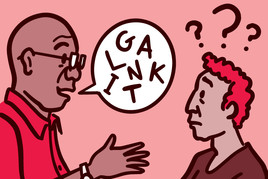
Illustration of one person confused about what the other is saying

Communication Breakdown

How Aphasia Affects Language

Even if your loved one has difficulty communicating, they can still be part of the conversation.


Health capsules


News in Health Icon

You can always find the latest issue on our home page: https://newsinhealth.nih.gov.  

facebook

Visit our Facebook page. We'd like to hear from you!


This email was sent to myhcistech.healthnews360@blogger.com using GovDelivery Communications Cloud on behalf of: National Institutes of Health (NIH) · 9000 Rockville Pike · Bethesda MD 20892 · 301-496-4000 / TTY 301-402-9612 GovDelivery logo

Ruxolitinib Benefits Some Patients with Graft-Versus-Host Disease - Cancer Currents Blog

National Cancer Institute

Having trouble viewing this email? View it as a Web page.

Bookmark and Share

You are subscribed to Cancer Currents: An NCI Cancer Research Blog from the National Cancer Institute. Recent posts are listed below.


05/29/2020
Patients with acute graft-versus-host disease (GVHD) that does not respond to steroid therapy are more likely to respond to the drug ruxolitinib (Jakafi) than other available treatments, results from a large clinical trial show.
This email was sent to myhcistech.healthnews360@blogger.com using GovDelivery Communications Cloud on behalf of: National Cancer Institute · BG 9609 MSC 9760 · 9609 Medical Center Drive · Bethesda, MD 20892 GovDelivery logo

Register: Dr. Toni Antonucci “Social Relations and Structural Lag: A Brave New Age” and ESI Awardees on June 8 - NIH Matilda White Riley Honors

Register to participate in this virtual event
national institutes of health - office of behaviorial and social sciences research
O B S S R Updates

June 1, 2020


Dear Colleagues:

The 13th NIH Matilda White Riley Behavioral and Social Sciences Honors will be held on Monday, June 8, 2020, from 9:00 am to Noon ET, via WebEx. View the meeting agenda and register today: https://bit.ly/nihmwr2020.

This year marks OBSSR's 25th anniversary, and we have an exceptional slate of honorees who will present recent and exciting innovations in behavioral and social sciences research.

The 2020 distinguished lecturer is Toni Antonucci, Ph.D., Elizabeth M. Douvan Collegiate Professor of Psychology and Program Director and Research Professor in the Life Course Development Program at the Institute for Social Research at the University of Michigan. Dr. Antonucci's research has improved our understanding of how social relations and networks impact health across the lifespan and particularly how social relations influence one's ability to manage life's challenges – a particularly timely research area given the pandemic challenges in the context of constrained social relations.  Dr. Antonucci has received funding from various NIH Institutes including NIMH and NIA, and is a recipient of the Research Career Development Award.  

This year's early stage investigator awardees include:

Presentation: E-cigarette marketing and youth experimentation
Julia Chen-Sankey, Ph.D., M.P.P.
Post-doctoral Fellow,
National Institute on Minority Health and Health Disparities,
National Institutes of Health

Dr. Chen-Sankey will discuss the importance of investigating e-cigarette marketing exposure and its consequence among tobacco-naïve young people in the U.S.; the associations between e-cigarette marketing exposure and e-cigarette use experimentation; and the public health implications including e-cigarette marketing regulations and counter-marketing interventions aimed at reducing e-cigarette use prevalence among young people in the country.  

Presentation: Examining the internalizing pathway to substance use in 10 cultural groups around the world
Andrew Rothenberg, Ph.D.
Research Scientist,
Duke University Center for Child and Family Policy

During this talk, Dr. Rothenberg will discuss his work identifying internalizing and externalizing developmental pathways that emerge in childhood and serve as precursors to illicit substance use; how these pathways vary within and between 10 cultural contexts in 7 nations around the world; how environmental contexts affect these developmental pathways, and describe how these contexts also differ across cultures around the world; and how knowledge about these developmental pathways and environmental contexts can be applied to interventions that prevent substance use in cultures around the world.   

Presentation: Skin tone and prenatal care outcomes among African-American women
Jaime C. Slaughter-Acey, Ph.D., M.P.H.
Assistant Professor, Epidemiology and Community Health,
Member, Minnesota Population Center,
Faculty, Center for Leadership Education in Maternal & Child Public Health,
University of Minnesota                  

Research highlighting and addressing racial health disparities in the U.S. is ample. However, this work often fails to recognize the complexity of racial classification and, thus, its intersection with other aspects of social identity (e.g., gender, skin color, sociopolitical context). Using examples from the literature and her current study, Dr. Slaughter-Acey will discuss how skin tone, as a result of racism and skin tone bias, influences access to prenatal care for Black/African American women.

Presentation: Mind over genome: Learning one's genetic risk for obesity changes physiology independent of actual genetic risk
Bradley P. Turnwald, Ph.D.
Postdoctoral Research Fellow,
Stanford University

Dr. Turnwald's presentation will cover two experiments that test whether merely learning of one's genetic risk for obesity alters one's actual risk by making people more likely to exhibit the expected changes in gene-related physiology, behavior and subjective experience. He found that merely receiving genetic risk information changed individuals' cardiorespiratory physiology, perceived exertion and running endurance during exercise, and changed satiety physiology and perceived fullness after food consumption in a self-fulfilling manner. He will discuss implications of these findings for clinicians, ethicists, and future research on the costs and benefits of communicating personalized genetic risk.

Individuals with disabilities who need reasonable accommodation to participate in this event should contact erica.moore2@nih.gov, 301-594-4392, and/or the Federal Relay (1-800-877-8339).

Please join me in honoring this year's Dr. Matilda White Riley recipients. I'm looking forward to an intellectually stimulating set of presentations and discussion. 

View the meeting agenda and register today: https://bit.ly/nihmwr2020.

William T. Riley, Ph.D.
Director, Office of Behavioral and Social Sciences Research
National Institutes of Health

Register


This email was sent to myhcistech.healthnews360@blogger.com using GovDelivery Communications Cloud on behalf of: National Institutes of Health (NIH) · 9000 Rockville Pike · Bethesda MD 20892 · 301-496-4000 / TTY 301-402-9612 GovDelivery logo

COVID-19: Survivor gives shoutout to plasma donors; DoD experts address mental health effects; resiliency

health dot mil banner image

Newsroom

Top Stories

plasma recipient

DoD COVID-19 survivor gives shoutout to doctors, plasma donors

Air Force veteran Patrick Bright, 55, a police officer with the Pentagon Force Protection Agency, nearly died from COVID-19. Then he received a new treatment. Bright ...


read more button link image

DoD experts address COVID-19 effects on mental health

The COVID-19 pandemic has changed how people live, interact, and cope with new stressors. However, military psychological health experts emphasize ...

read more button link image
mental health roundtable
labyrinth

Building your mental health through resiliency 

This year's observance of Mental Health Awareness Month during May coincided with one of the most complex challenges in recent history ...

read more button link image

This email was sent to myhcistech.healthnews360@blogger.com by: Military Health System · The Pentagon · Washington, DC 20301
GovDelivery logo