Thursday, November 5, 2020

Research Highlight: Testing and Refining Biomarkers to Support Intervention Research for Children with Autism

We're now on Instagram! Follow us @NIMHgov

Research Highlight: Testing and Refining Biomarkers to Support Intervention Research for Children with Autism

There is a need for objective measures—biomarkers—that can separate individuals with autism spectrum disorder (ASD) into subgroups for clinical trials, leading to more predictive and personalized treatment.

The NIH-funded Autism Biomarkers Consortium for Clinical Trials (ABC-CT) was established in 2015 to address this need. The goal of the multisite study was to test and refine a set of biomarkers that could be used as reliable, objective measures of variation in social impairment in ASD. Ultimately, the researchers wanted to test and refine these objective measures of social impairment for use in clinical trials, which could help define which individuals with ASD would best respond to particular treatments. Primary analyses of the data were completed in June 2020.

Learn more


This email was sent to myhcistech.healthnews360@blogger.com using GovDelivery Communications Cloud on behalf of: National Institute of Mental Health · 6001 Executive Boulevard · Bethesda, MD 20892-9663 · 1-866-615-6464 GovDelivery logo

Thank you Caregivers. 💙

National Caregivers Month resources & COVID-19 support.
Our Promise During COVID-19: The Autism Society of America promises to remain committed to improving the lives of all affected by autism across the spectrum and throughout the lifespan, and will focus on providing information, resources, and advocacy efforts to address these urgent needs. 
 
 
The Autism Society of America is proudly celebrating, supporting and empowering caregivers across the country in honor of National Caregivers Month. As the pandemic continues with limited or interrupted services, the strain on caregivers continues to build; visit our toolkit for respite resources, or contact our National Helpline for additional support.
CHECK OUT OUR NOVEMBER TOOLKIT
 
Don't wait until December 1st to get involved in #GivingTuesday! Host a fundraiser, donate, and spread the word to help us reach our $25,000 goal towards creating a #SpectrumOfOpportunity for individuals with autism. 
GET INVOLVED
 
 
Autism Society affiliates have gone above and beyond to provide creative solutions to support the autism community during this time, including:
  • The Autism Society of Southern Arizona has partnered up with PLAYFORMANCE to host virtual meet-ups for teens with Autism for a fun and interactive experience from the comfort of home.
  • The Autism Society of Central Virginia is hosting a conference series of weekly presentations featuring topics for self-advocates, caregivers, and professionals, providing valuable information and resources for the autism community.
  • The Autism Society of San Diego successfully hosted their first ever online talent competition and fundraiser to showcase the talents of children and adults diagnosed with Autism Spectrum Disorder. Check out this year's winner, DJ Jonah "J The King" Parks from Carlsbad.
FIND A LOCAL AFFILIATE
 
Facebook
Twitter
https://www.instagram.com/autismsociety/

Visit our Website |  Donate

Autism Society
6110 Executive Boulevard, Suite 305
Rockville, MD 20852
United States

If you believe you received this message in error or wish to no longer receive email from us, please unsubscribe.

Colorectal Cancer Rising among Young Adults - Cancer Currents Blog

National Cancer Institute

Having trouble viewing this email? View it as a Web page.

Bookmark and Share

You are subscribed to Cancer Currents: An NCI Cancer Research Blog from the National Cancer Institute. Recent posts are listed below.


11/05/2020
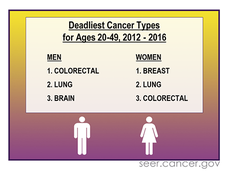
Diagnoses of colorectal cancer continue to increase in younger adults. In September 2020, more than 400 leading scientists and patient advocates participated in an NCI/NIEHS-sponsored symposium to identify research priorities that address important questions about this concerning trend.
This email was sent to myhcistech.healthnews360@blogger.com using GovDelivery Communications Cloud on behalf of: National Cancer Institute · BG 9609 MSC 9760 · 9609 Medical Center Drive · Bethesda, MD 20892 GovDelivery logo

In Honor of National Family Caregivers Month: A Note on Caring for Older Adults with a History of Trauma

Having trouble viewing this email? View it as a Web page.

From Our Partners

Bookmark and Share

In Honor of National Family Caregivers Month: A Note on Caring for Older Adults with a History of Trauma

By Barbara Joyce Bedney, PhD, MSW, Director of Research and Evaluation, Center on Aging and Trauma, The Jewish Federations of North America


November is National Family Caregivers Month, a time when we recognize the millions of Americans who are caring for loved ones with illnesses, disabilities, and other physical, cognitive, and mental health conditions. From helping with shopping and transportation to providing complex medical care in their own homes, these family caregivers are a vital component of the health and long-term care system and a critical resource sustaining our national economy. For older adults facing the devastating toll of social isolation wrought by the COVID-19 pandemic, they are also a lifeline to the outside world and source of hope for better days ahead.


But for many family caregivers, these are tasks made more difficult as a result of trauma in the lives of the people they are caring for.


Because trauma can lead to difficulties trusting others and to fears of intimacy, for example, and trust and intimacy are cornerstones of caregiving relationships, caring for individuals with a history of trauma can be particularly difficult and stressful. For older adults in particular, the changes associated with aging, such as retirement, the loss of family members and friends, and declining health can lead to the emergence of trauma symptoms years or even decades after a traumatic experience. Older adults with a history of trauma are also vulnerable to being retraumatized by sights, smells, events, and other stimuli associated with past traumatic experiences. Many Holocaust survivors, for example, hoard food as a result of the deprivation and starvation they experienced during the Holocaust. For these survivors, common caregiving activities around food, such as cleaning out the refrigerator, can be retraumatizing. The acute anxiety that can result from such retraumatization can be intensely stressful for family caregivers, who may not know what caused the sudden upset or agitation in their loved ones or know how to comfort them once it occurs.


At The Jewish Federations of North America Center on Aging and Trauma, we are working with our partners to create 'person-centered, trauma-informed' services for family caregivers to help them manage these types of trauma-related issues while they carry out their caregiving tasks. It is our way of answering the call of the Administration for Community Living to RAISE (Recognize, Assist, Include, Support, and Engage) family caregivers. We are proud to be a part of this exciting national movement through this work and hope you will join us in RAISING the family caregivers in your communities.    


Back to top

FacebookTwitterYoutube

This email was sent to myhcistech.healthnews360@blogger.com using GovDelivery Communications Cloud on behalf of: Administration for Community Living
·330 C Street SW  · Washington, D.C. 20001
GovDelivery logo

NIH researchers identify gene in mice that controls food cravings, desire to exercise

Having trouble viewing this email? View it as a Web page.

Bookmark and Share

You are receiving this message because you are subscribed to News Releases for National Institutes of Health (NIH).


11/05/2020 12:00 PM EST

The gene, Prkar2a, is highly expressed in a tiny brain region involved in responses to pain, stress, anxiety, sleep and reward.

This email was sent to myhcistech.healthnews360@blogger.com using GovDelivery Communications Cloud on behalf of: National Institutes of Health (NIH) · 9000 Rockville Pike · Bethesda MD 20892 · 301-496-4000 / TTY 301-402-9612 GovDelivery logo

The gut trains the immune system to protect the brain

Having trouble viewing this email? View it as a Web page.

Bookmark and Share

You are receiving this message because you are subscribed to News Releases for National Institutes of Health (NIH).


11/05/2020 09:45 AM EST

Gut-trained immune cells at CNS borders guard against meningitis and other infections.

This email was sent to myhcistech.healthnews360@blogger.com using GovDelivery Communications Cloud on behalf of: National Institutes of Health (NIH) · 9000 Rockville Pike · Bethesda MD 20892 · 301-496-4000 / TTY 301-402-9612 GovDelivery logo

American Heart Association: Online course to facilitate improved outcomes of stroke for patients impacted by pandemic

Hello HCIS,

Thank you for your interest in news from the American Heart Association. Click below to see the latest updates:

November 05, 2020
Online course to facilitate improved outcomes of stroke for patients impacted by pandemic

https://newsroom.heart.org/news/online-course-to-facilitate-improved-outcomes-of-stroke-for-patients-impacted-by-pandemic


Click below to unsubscribe from American Heart Association email alerts.

Unsubscribe