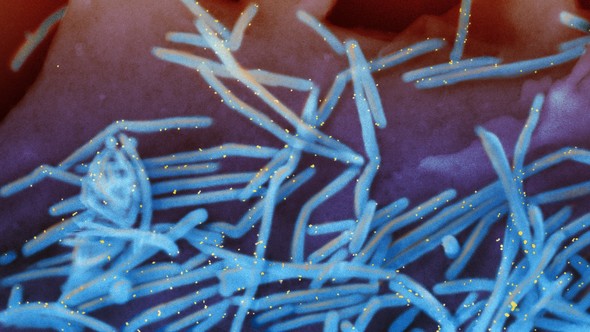
Monday, June 21, 2021 Scanning electron micrograph of human RSV virions (colorized blue) and labeled with anti-RSV antibodies (colorized yellow) shedding from the surface of human lung epithelial cells. Credit: NIAID Nearly a third of infants who are hospitalized with a severe form of a common childhood lung infection called bronchiolitis develop asthma a few years later. But clinicians have been unable to predict which infants with severe bronchiolitis are at high risk for developing asthma and to understand why. Now, a NIAID-funded study published in the journal Nature Communications has taken a step toward accomplishing this. The study identifies which infants hospitalized with bronchiolitis caused by respiratory syncytial virus (RSV) are at highest risk for developing asthma by age 5 years. In conjunction with earlier research, the findings suggest that the interaction between viral infection, unique microbes, and interferon signaling may play a role in the development of asthma among infants.  | 




No comments:
Post a Comment