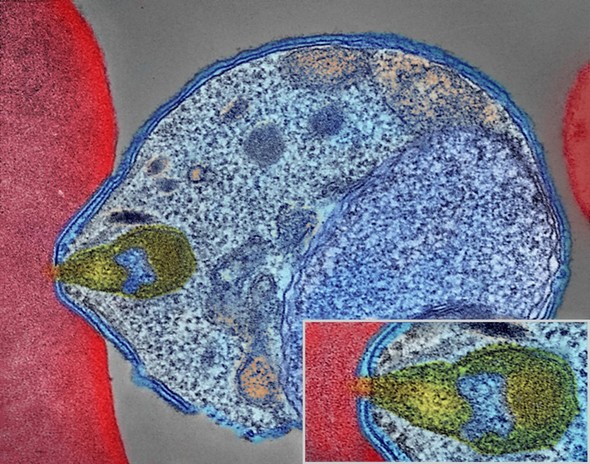
| Thursday, August 12, 2021 Colorized electron micrograph showing malaria parasite (right, blue) attaching to a human red blood cell. The inset shows a detail of the attachment point at higher magnification. Credit: NIAID One dose of a new monoclonal antibody discovered and developed at NIAID safely prevented malaria for up to nine months in people who were exposed to the malaria parasite. The small, carefully monitored clinical trial is the first to demonstrate that a monoclonal antibody can prevent malaria in people. The trial was sponsored and conducted by scientists from the NIAID Vaccine Research Center and was funded by NIAID. The findings were published yesterday in the New England Journal of Medicine. To build on this research, a larger NIAID Phase 2 clinical trial is underway in Mali to evaluate the safety and efficacy of the antibody at preventing malaria infection in adults during a six-month malaria season. | 





No comments:
Post a Comment