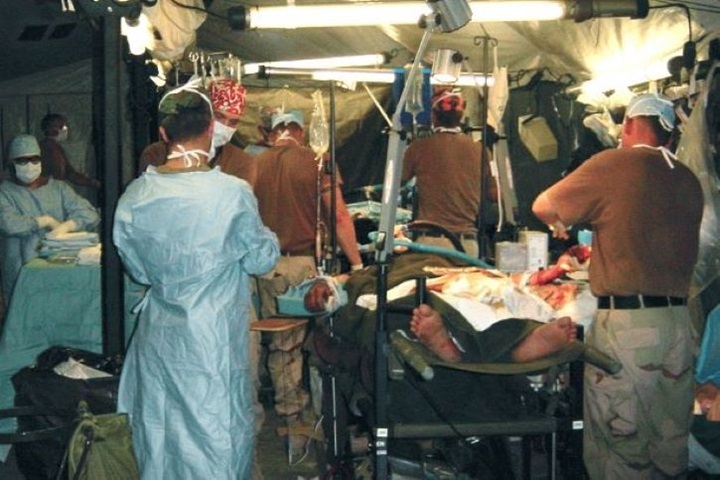
| 30 Years after Desert Storm, Military Medicine Evolving 'Phenomenally' Tactical Combat Casualty Care improved and totally transformed combat casualty care, pre-hospital, said retired Army Col. (Dr.) Leopoldo "Lee" Cancio, who served in the conflict. "It served as a foundation for everything that we now teach medics and general medical officers, physician assistants, etc., for the pre-hospital environment." | | Medical Advances Since Gulf War Boil Down to Increased Lives Saved The evolution of Tactical Casualty Care resulted in the development of improved hemorrhage control techniques and even early versions of telemedicine, allowing for medical consultations by physicians far from the point of care. | Since Gulf War, Advanced Prosthetic Technology Saves Lives, Careers Since the first Gulf War ended in early 1991, military medicine and battlefield care has made enormous strides, including the development of modern-day prosthetic limbs. | | | Technology for 3D printing is transforming the Military Health System (MHS). Advances in prosthetics are helping wounded warriors take on activities like ice hockey, rock climbing, and CrossFit. | | | Here's some news around the MHS you might have missed: Since 9/11, the level of medical care for service members, retirees, and their families continues to improve and change. | | Extra! Extra! The Military Health System is America's largest health care system: saving lives on the battlefield, combatting infections diseases, and providing health care services to 9.6 million beneficiaries around the world. Get to know the MHS team by reading their stories. We can't wait to meet you! | | | |





No comments:
Post a Comment